SMARTS Center at the IPCC Outreach 2026


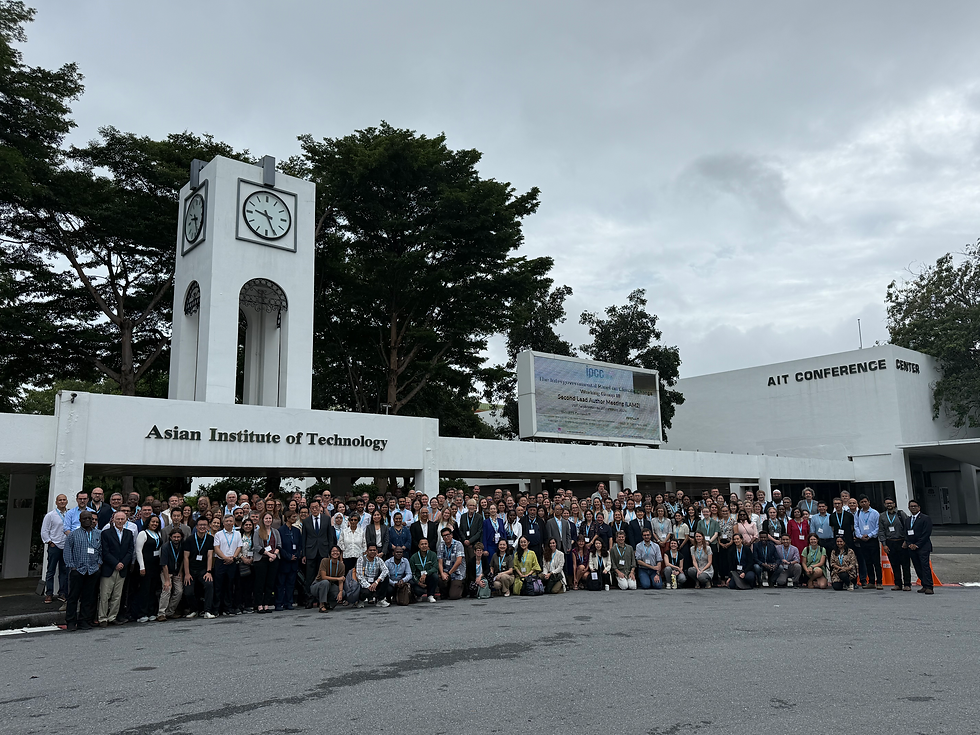
At the International Panel on Climate Change (IPCC)’s Asia and the South-West Pacific Regional Outreach in Support of the IPCC Process on March 29, 2026, in Bangkok, Thailand. SMARTS Center and our early-career researchers had the opportunity to learn and connect with the diverse panel of IPCC experts and representatives, its partners, and fellow researchers from the field.
The sessions include an introduction to the IPCC’s development history and mechanisms, panels for regional experts to share their contextual insights, expertise, and concerns for the marginalized and disproportionately affected by climate impacts. Prof. Joyashree Roy participated as a panelist and explained SMARTS Center’s objectives, approaches, and contributions to bridge the knowledge gap in the IPCC assessment reports.
A thematic discussion on how regional early-career researchers, in addition to their discipline-specific abilities, have expertise and innovation with new methodologies and technologies, as well as the lived experiences of climate impacts. All of which can be contributed to the IPCC by engaging national focal points, contributing to the scientific literature base, joining as contributing authors and chapter reviewers. SMARTS researchers, alongside the other stakeholders, were given opportunities to share their experience and concerns for the IPCC’s consideration.
Additionally, panelists and attendants from regions and countries affected by climate impacts provided the researchers with contextual insights and unique perspectives to address gaps in climate research. The forum highlighted the urgent need for more region-specific and inclusive climate data and solutions, especially from the Global South, to the IPCC process, because many in the region are facing the lived reality of climate-induced hazards and losses daily.
Key takeaways:
🎯The Nationally Determined Contributions (NDCs), countries' voluntary commitment to climate actions, are not being met. Leading to possible futures of temperature increase beyond 1.5 °C and the subsequent increase in losses of human and planetary well-being.
📝Researchers of all levels, including early career researchers, can engage with the IPCC through their national focal points, contributing to the literature base, joining as contributing authors, and chapter reviewers.
❗There is an urgent need for more region-specific and inclusive climate data and resolution, especially from the Global South to the IPCC process, because many in the region are facing climate-induced hazards and losses daily. There is a wealth of data from the Global South, but there is a need to bridge this data to climate research due to barriers.

Learning more about SMARTS Center’s objectives and commitments here:
Find SMARTS Center’s publication here:
Abishek Das
Firuz Ahmed Nahid
Joyashree Roy
Joyee S Chatterjee
Nyi Min Satt Naing
Prathana Panwar
Sirayuth Thongprasert